Author John F. Allen will attend InConJunction 2013, July 5 – 7!

InConJunction banner

This Friday, July 5th is the start of InConJunction, one of Indianapolis’ longest-running genre cons.

It will be held at:

Indianapolis Marriott East

7202 East 21st Street · Indianapolis, Indiana 46219 USA

This weekend will mark my first appearance at InConJunction as a fan and as an author. I’ll be sharing a table with local authors Eric Garrison and RJ Sullivan Myself and the other aforementioned authors are published through Seventh Star Press and will be sharing some panels. Unfortunately, as it stand I WILL NOT have The God Killers at this time, but I will be handing out FREE Collectable Trading Cards at the SSP Table! GET YOURS WHILE THEY LAST!

Please come check me out as I speak on various panels.

John F. Allen Author of The God Killers
John F. Allen
Author of The God Killers

My panels are as follows:

Friday, July 5

5 PM, Indianapolis Ballroom C

“Mentorship in Writing” (1 hour) with James O. Barnes, Addie King, Eric Garrison, and RJ Sullivan.

Saturday, July 6

10 AM, Veterans Hall 1

“Writers Roundtable: Urban Fantasy” (1 hour) myself

11 AM, Indianapolis Ballroom C

“On the Write Track: So You Want to Be a Writer” (1 hour) with James O. Barnes , Nicole Cushing , Lou Harry , Eric Garrison , Mark Wandrey

2 PM, Indianapolis Ballroom C

“On the Write Track: Mistakes Beginning Writers Make” (1 hour) with Matthew Barron , Nicole Cushing , Ms. Frida Westford , Mark Wandrey

6PM, Indianapolis Ballroom C

“Worldbuilding: Characters” (1 hour) with Nicole Cushing , James S. Dorr , Sara Miller , Mark Wandrey

7PM, Indianapolis Ballroom C

“Worldbuilding: The Basics” (1 hour) with Cherie Priest , Mark Wandrey

Sunday, July 7

11AM, Indianapolis Ballroom C

“Blogging Today” (1 hour) with James O. Barnes

Here’s the InConJunction home page for a complete listing of the weekend fun!

Hope to see you there!!

URBAN FANTASY AND PARANORMAL ROMANCE

What’s the difference?

If I were asked—as I often am—to name a genre which my forthcoming novel The God Killers fits in, it would be urban Fantasy. I suppose this is mainly because the city in which the protagonist currently resides and the one of her birth, play an integral part in the story and because the protagonist’s ultimate goal isn’t a romantic relationship. However, when it comes to the genres of Urban Fantasy and Paranormal Romance, I’ve given some thought as to what the main differences are. As I write, I also read, therefore I’ve read plenty of urban fantasy novels as well as paranormal romance.When I think of the differences between them, I first come to their one and only concrete commonality, PARANORMAL ENTITIES.

Every urban fantasy or paranormal romance I’ve ever read had some form of paranormal creature/being as main characters and/or supporting characters. Whether it is vampires, werewolves, zombies, wizards, angels, demons, mythological deities, etc… something of the sort was present. How they differ is a gray area to be sure, but I’ve thought about it for some time and I’ve come to certain conclusions.

PARANORMAL ROMANCE

PARANORMAL ROMANCE
PARANORMAL ROMANCE

By definition, a paranormal romance focuses on romance and includes paranormal elements. Usually—like in a contemporary romance—the story starts out with the eventual lovers meeting, acknowledging a powerful mutual attraction, yet something stands in their way.Whatever the reason their lives are complicated, midway through the story things change in some way or they decide to live dangerously. Eventually, our intrepid couple determines that they’re hopelessly in love.

Paranormal romances can contain action and also have some graphic scenes of horror, but at its core it is a romance. While many novels in this genre have plenty of action, horror, and suspense these things are not as of great importance as the love story.

Recently, Paranormal Romance has become one of the largest selling subgenres of science fiction and fantasy.

Also, unlike urban fantasies, a paranormal romance isn’t necessarily tied to a large, modern day city. (see below)

URBAN FANTASY

URBAN FANTASY
URBAN FANTASY

In my opinion, urban fantasy must contain something other than the love interest as the protagonist’s main goal. This subgenre is considered steroid addled cousin of paranormal romance. As I mentioned before, paranormal romance is fundamentally a romance, while urban fantasies are fundamentally fantasies.

A large portion of the tale must take place in a city. The urban fantasies I’ve read almost always take place in a large, modern day city where paranormal creatures exist.

That said, there’s no law that says it has to be a modern city, and the timeframe could be one from the past, the future, or possibly on another planet altogether.

Similar to the paranormal romance, urban fantasies must contain one or more characters that have abilities and/or origins far beyond those of mortal men. Vampires, witches, werewolves, oh my!

Unlike a paranormal romance, the urban fantasy can contain elements of romance, but romance is NOT the main focus and/or goal of the protagonist.

In conclusion, while I admit to enjoying both subgenres, there is a difference between them. Something to think about when writing a paranormal novel or choosing one to read!

© 2013 John F. Allen

URBAN FANTASY HAS ROOTS

THE GOD KILLERS FACEBOOK COVER ARTWhile I’m not a big fan of romance novels, I don’t mind them nearly as much when the characters are gritty and preternatural creatures are involved, downplaying the sappiness associated with most novels where the word romance is used. Paranormal romance novels are the next big thing and filling the bookstore shelves in record numbers. Spurred on further by young adult novels such as Twilight, this newly developed niche genre has been spreading like wildfire.

When I first heard the term urban fantasy used to describe a sub-genre of fantasy, I wasn’t exactly sure what the term meant. Most times the word urban brings to mind things associated with black people. I know that the word actually means, ‘relating to or belonging to a city’ however, urban radio, urban news, urban plight, the urban center are merely PC ways of referring to things associated with blacks.

The first novel I read—remotely fitting into this genre—was Guilty Pleasures by Laurell K. Hamilton, featuring vampire hunter Anita Blake. The novel was originally billed as a horror/mystery novel, which is as accurate of a description as any. The novel contained all of the elements of a mystery and read like a Robert B. Parker mystery novel which is a BIG compliment coming from me. However, the paranormal elements were present as well. Vampires, werewolves and zombies, oh my!

Another urban fantasy author named Jim Butcher popped up with a novel titled Storm Front, which introduced us to Chicago wizard Harry Dresden. The most common links between Hamilton and Butcher’s novels was:

a) both were set in major US cities, and

b) they both featured paranormal creatures.

I would also like to bring to light another commonality of the two novels—which is true about most novels in the genre,—in that the main characters were white. I have no problem with either author having predominately white characters because the authors are white and you often write what you know. However, shortly after I discovered these authors, I was introduced to another author named L.A. Banks. I was pleasantly surprised that a black author was writing in this genre and the novel featured a black main character. I found other black authors in the genre, yet those I did find such as Seressia Glass and Maurice Broaddus—were far and few between.

Another problem for blacks writing in this genre is the whitewashing of their book covers. Far too often you see books with black protagonists who aren’t featured on the book covers. Why is this? It’s almost like in the sixties when blacks weren’t allowed to be on the covers of their albums because the white mainstream wouldn’t buy them. I’m happy to say that Banks, Broaddus and Glass feature their black characters prominently on the covers of their books, which is as it should be.

The sad truth is there just aren’t that many black authors writing in this genre. As a writer whose work fits within the urban fantasy genre, I intend to add my voice to the fold with my debut urban fantasy novel, The God Killers due out this summer and published by Seventh Star Press. Over the years, I’ve spoken to countless people who are hankering for more works from black authors. Which lead me to believe that we should be working towards bringing black urban fantasy writers to the forefront of people’s minds and the bookstore shelves. I know there’s a market for black urban fantasy novels and that urban fantasy has small black roots which we must nourish and help to grow.

© 2012 John F. Allen

THERE’S NOTHING NEW UNDER THE SUN

Sun_woodcutWhen I was a child, my grandmother told me one day, “There’s nothing new under the sun.” At first I didn’t understand what she meant. Later, as I got a little older I refused to believe her, and was determined to prove her wrong. Finally, when I began focusing on my career as a writer, I accepted her nugget of knowledge as fact, and learned to embrace it for the truth it is. However, if the above observation is true, then what makes any story different from the next?

The answer…

LIFE EXPERIENCE, IMAGINATION, VOICE AND STYLE.

As most fiction writers will agree, we are products of our environment and individual life experiences and therefore, it stands to reason that many of the seeds for our story plots originate from said life experiences. This can be from what we’ve dealt with on a personal level, what we’ve heard from others, or seen around us including—but, certainly not limited to—what we’ve watched on television, read in books or learned in school. These personal life experiences give our stories a unique flavor which cannot be exactly cloned due to the intricate variables in our individual lives.

I believe that there is a collective consciousness which extends to us all, as we tap into our imaginations and creativeness. We must also accept the fact that the possibilities for formulating scenarios involving larger than life creatures, myths, epic heroes and monsters is finite, just as our voices and styles are infinite. As writers, we sometimes find in the course of plotting a story that we read stories from someone else who came up with very similar ideas for their already published work(s). It is because of this, I continue to work against the truth stated in the title of this post, in order to produce unique stories. I feel in doing this, I can delve deeper into the recesses of my imagination, creativity and life experiences to produce my very own individual story. It is here that we begin to use our imagination to find a variation of the themes we draw from our life experiences and formulate creatively new and exciting takes on tried and true scenarios and themes. It is then that we brand our stories with distinctive twists and turns and imbue it with our own individual spirits and personalities.

As a writer, I’m constantly thinking up new story ideas and using my voice and style to tell the stories. All writers have their own unique voice and style, which separates them from other writers. When it comes to certain elements of storytelling, there are no new ideas. Often, writers of genre fiction ultimately come across elements in another author’s work that closely resembles their own. While this is a common phenomenon, it doesn’t mean that we can’t separate ourselves from other storytellers using similar scenarios and/or themes; it merely means we must work all the more harder at imparting our own essence into our work in order to make it exclusive to us.

Just as there are finite possibilities in regards to scenarios and themes, there is again something to be said for voice and style. I’ve read books that had such similar plots that if you broke it down to the bare essentials it could be the same book. However, what separated the books was the differences in how the authors delivered the story, developed the characters, and the language used to breathe life into the personalities of the characters. How we tell a story, and how much of ourselves we put into our works, is what sets us apart from other writers with similar ideas and themes.

Always remember the old Vulcan axiom from the Star Trek series, Infinite Diversity in Infinite Combinations (IDIC), the philosophy which celebrates the vast array of possibilities and variables in the known universe. And while there are finite themes when stripped down to their essential cores, when we take into consideration the life experiences, imagination, voice and style of the storyteller, the possibilities are indeed infinite and quite fascinating.


© 2013 John F. Allen

SUPER SWEET BLOGGING AWARD

super-sweet-blogging-award21w6451

I WON THE SUPER SWEET BLOGGING AWARD!!!

I want to first thank Sherri Matthews for nominating me for the Super Sweet Blogging Award!

Here are the rules to be completed for this award:

THE RULES:

1. Thank the Super Sweet Blogger that nominated you.

2. Answer 5 Super Sweet questions.

3. Include the Super Sweet Blogging Award in your blog post.

4. Nominate a baker’s dozen (13) other deserving bloggers

5. Notify your Super Sweet nominees on their blog


 THE 5 SUPER SWEET QUESTIONS:

 1-Cookies or Cake?

CAKE!

2-Chocolate or Vanilla?

Chocolate

3–Favorite Sweet Treat?

Reese’s Peanut Butter Cups

4-When do you crave sweet things the most?

Before going to bed

5-Sweet Nick Name?

My wife calls me Honey!


HERE ARE MY SUPER SWEET BLOGGERS:

1. Derrick Ferguson

2. Nia Trevisa

3. Jeff Goins

4. Selah Janel

5. Balogun Ojetade

6. Valjeanne Jeffers

7. RJ Sullivan

8. Maurice Broaddus

9. Eric Garrison

10. Melodee L. Allen

11. Andrew Leiter

12. Michael West

13. Milton Davis


BURNING THE MIDDLE GROUND BLOG TOUR WITH L ANDREW COOPER

Burning-CoverRev3Title: Burning the Middle Ground

Author: L. Andrew Cooper
Publisher: BlackWyrm
ISBN: 978-1-61318-138-6
Binding: Paperback
Pages: 330
Available @: Amazon and Barnes & Noble

LAndrewCooperToday I have the pleasure of Spotlighting in my blog, writer L Andrew Cooper! His debut novel is titled, “Burning the Middle Ground.”

L Andrew Cooper is a writer at BlackWyrm Publishing, a publisher of fine speculative fiction. Cooper is a fresh new voice and rising star in the speculative fiction world.

Biography:

L. Andrew Cooper thinks the smartest people like horror, fantasy, and sci-fi. Early in life, he couldn’t handle the scary stuff–he’d sneak and watch horror films and then keep his parents up all night with his nightmares. In the third grade, he finally convinced his parents to let him read grownup horror novels: he started with Stephen King’s Firestarter, and by grade five, he was doing book reports on The Stand.

When his parents weren’t being kept up late by his nightmares, they worried that his fascination with horror fiction would keep him from experiencing more respectable culture. That all changed when he transitioned from his public high school in the suburbs of Atlanta, Georgia to uber-respectable Harvard University, where he studied English Literature. From there, he went on to get a Ph.D. in English from Princeton, turning his longstanding engagement with horror into a dissertation. The dissertation became the basis for his first book, Gothic Realities (2010). More recently, his obsession with horror movies turned into a book about one of his favorite directors, Dario Argento (2012). He also co-edited the textbook Monsters (2012), an attempt to infect others with the idea that scary things are worth people’s serious attention.

After living in Florida, South Carolina, Georgia, Massachusetts, New Jersey, and California, Andrew now lives in Louisville, Kentucky, where he teaches at the University of Louisville. Burning the Middle Ground is his debut novel.

Burning the Middle Ground is a unique blend of horror and dark fantasy which takes place in a  a small Southern town being ripped asunder by a supernatural conspiracy.

Five years after tragic murders divide Kenning, Georgia along religious lines, Ronald Glassner, a web journalist from New York, arrives to write a book about the tragedy’s sole survivor, Brian McCullough. Homicidal house pets, enucleated corpses, and menacing apparitions soon help Ronald understand that there’s something much bigger going on in Kenning, something connected to the town’s First Church and the imposing Reverend Michael Cox. With Brian, Brian’s girlfriend Melanie Grayson, progressive preacher Jeanne Harper, and police officer Winston Beecher, Ronald embarks on an investigation that takes them all into a nightmarish plot that will change the entire country.

I thoroughly enjoyed L Andrew Cooper’s modern take on the Horror/Dark Fantasy hybrid genre he produced in Burning the Middle Ground and I’m sure you will also! As a writer, I’m  honored to be in a position to spread the word about such a talented storyteller.

You owe it to yourself to check out Burning the Middle Ground, it’s definitely a treat to be had!

LAndrewCooperTourBadge

STAR TREK FRANCHISE DISCUSSION:

To boldly go where we already boldly went before, while giving a dying franchise a shot in the arm!
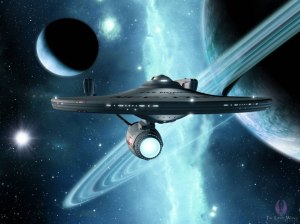
Star-Trek

THIS ISN’T A REVIEW OF THE STAR TREK: INTO DARKNESS FILM!!!

I saw a special screening of Star Trek: Into Darkness, prior to its official debut and while I really enjoyed the film and got a little more than what I expected, it wasn’t new and mind-blowing, which to me means that they did it right.  The following is MY OPINION on what this reboot for Star Trek is and what it means for the franchise. This explores why I think director JJ Abrams has done a GOOD job with the franchise reboot and why the different direction/changes were necessary in my opinion. While this is an opinion piece and open to comments, let’s keep any disagreements civil and courteous, with the idea that I’m in no way trying to convert you to my way of thinking/opinion. That said, fellow Trekkies please refrain from tossing bottles and rotten tomatoes at me during a convention/conference or other such public event!

Quite a few Star Trek fans affectionately known as Trekkies (some of which I happen to KNOW and LOVE) were up in arms when JJ Abrams was tapped to direct the Star Trek reboot/reimaging. I have to admit, I was skeptical myself and I consider myself to be a more open minded Trekkie than most of my brethren. That said, if you look at box office receipts alone, the first film was VERY successful. This and the fact that it is an established franchise is the reason we have the sequel out in theaters right now.

Recently, I had an online discussion with some of my friends and fellow Trekkies about ST:Into Darkness and they weren’t impressed. Of course, some of them weren’t impressed with the first film in the reboot and neither they or I expected any different result. Besides the complaints of obvious plot holes (it’s not like any of the other Star Trek TV series and/or movies had them, lol!), there was the lack of respect they felt was given to the source material. This is the meat of this special, Star Trek Franchise Discussion!

It is my opinion (and therefore not law or any attempt on my part to sway you to my line of thinking) that while I’m a fan of Star Trek, I think that it was only really thought provoking sci-fi when and because the content was relative to the period in which it was spawned. (This is my personal opinion, so again don’t throw bottles and/or rotten tomatoes! =D). The core idea behind the TV show was Wagon Trail to the stars…most of today’s audience doesn’t even get that reference. The franchise had to reset and reinvent on some level just to be relevant to today’s audience (outside of Trekkies). Honestly, (again in my opinion) JJ Abrams has done just that. If he hadn’t, it would have been the same stories told the same way and I personally didn’t want that.

The Space Age is said to have officially began in 1957 with Sputnik, which was nine years prior to the debut of Star Trek: TOS. Something must be said in regard to the leap in sci-fi fanfare during this time as man was coming into an age of real life space exploration and this show was the inspiration for much of the fascination with space exploration and modern technology we take for granted today. ST:TOS was cutting edge for its time with wireless handheld communicators, wireless headpieces, pneumatic doors, portable computers, artificial intelligence, two way communication screens, needle-less injections and portable medical scanners. Guess what? We have all of those things as a reality today. Back then, our reality was Science Fiction and we’ve come a long way indeed. So, how do we take things that seemed so cool and FAR OUT (I know I’m dating myself) and make them new and fresh and hip to today’s audience?

I think JJ Abrams had no choice but to do things the way he did to make the concept and the imagery relevant to today’s audience, much to the chagrin of diehard Trekkies. There’s a reason that the deck of the Enterprise looks like the inside of an Apple store as opposed to how it looked on the show…relatability! Today’s generation knows what the Apple store looks like inside and they get excited by being there, a replica of the ST:TOS set…not so much. Abrams had to make the set look inviting to a new generation, while achieving a similar configuration to the original set. I would think this would be a VERY difficult undertaking to say the least (and for those whining about it, can you do any better?).

Another aspect of the lost of relevance ST:TOS is the idea of an international community. Most people 40 and over can remember a time when the world wasn’t at your fingertips and news from the other side of the world came in days, if not weeks, as opposed to seconds. Gene Roddenberry envisioned Star Trek as “Wagon Trail to the stars,” essentially a space western (is it any wonder Captain Kirk has such a cowboy-esque attitude?). He also addressed issues such as The Cold War and the Civil Rights Movement. It was very socially conscious to have a Russian and an African American (a woman no less) as main characters in the show, not to mention giving television its first interracial kiss! The show gave the world a glimpse of a world where we had moved beyond the constraints of race, creed, color, religion and even species, in an effort to be equally accepted. These were VERY hot bed issues of the time…not so much today (although, we still have a VERY LONG WAY TO GO!).

I say all of this to make the point that Abrams had to find a way to take a sci-fi franchise, steeped in past social and historical issues/relevance and relate that to a generation that had never experienced (even a little bit), what was very much a part of everyday life back then. Let’s be real, today’s kids (anyone 30 or younger) have not lived, breathed and otherwise experienced many of the struggles society had with the themes ST:TOS explored at that time. Ask them about the Cold War, the Civil Rights Movement or laws against interracial dating/marriage and you’ll likely get a blank stare as this is VERY common today.

The Star Trek franchise made another attempt in the late 90’s to revitalize itself and try to capture the spirit of ST:TOS, when they introduced a TV show called Enterprise. The show depicted the early days of Starfleet (pre Kirk) and while it resonated with some, it’s reception overall was lackluster compared to the series and movies that proceeded it. There is a reason (imho) that Enterprise failed to capture the audiences beyond a handful of seasons and was never revisited, and chief among them was it’s relatability to the audience/generation. That group of folks had grown up with Star Trek:The Next Generation as their (in some cases only) exposure to the Star Trek franchise and to quite a few of them, Enterprise was boring.

We also have to take into consideration that ST:TNG was best able to capture the audience with social issues of the time and cool technology (that had not yet been produced for public consumption). ST:TNG had holodecks, badge communicators, voice recognition software for computers, touch screen computer consoles and tablet PC’s. Kids today have all of those things now…it’s not anything to be excited about anymore and definitely not so cool and wonderful as it was in the mid 1980’s. Another thing about ST:TNG was that it didn’t have to try to establish preceding mythos of the franchise, it jumped right into the fray and won the admiration of Geekdom by providing a setting in the future , more advanced tech/weaponry, new species and special effects on par with anything the Star Trek movies ever produced.

The above opinions all work to illustrate the following: How could Hollywood take ST:TOS (a sci-fi franchise that had been struggling for years to crossover and reach larger audiences in the theaters), make it more mainstream and reach a newer, broader audience? They had to reinvent the wheel and that is a VERY difficult thing to do and impossible to please everyone in the process. I think that this is something the diehard Trekkies should take into consideration a bit more (or get their ideas at doing it better out to Hollywood). In my opinion it all boils down to taking the canon of a TV show made in the 1960’s which addressed the social and historical issues of that era, featuring technology that (about half of) is common in today’s world and making it resonate with today’s generation. A different direction had to be taken, love it or hate it, Abrams did that. He didn’t make a perfect movie(s), nor did he necessarily capture the charm and sense of wonder that ST:TOS had (although in my opinion that’s impossible), but what he did do is make films that introduced beloved characters to a new audience, took elements of the franchise and wove them into something new and relatable to said new audience. An effort which I personally salute!

In regards to the underwhelming box office numbers for the latest foray into the Star Trek franchise, I think it has far less to do with disgruntled fans of the genre and franchise, than it has to do with BOX OFFICE COMPETITION!!! With Iron Man 3(already a billion dollar franchise) having been recently released, and The Great Gatsby still at the box office, it’s no wonder (at least to me) that Star Trek didn’t earn as much as the studio had hoped. But, in all honesty, earning only 25 million short of what they wanted to see, against Iron Man 3 (a movie that had made a billion dollars already by the time Star Trek came out) was VERY impressive and respectable, imho.

In conclusion, I think that the Star Trek franchise accomplished its mission in that it:

A)Rejuvenated a beloved (but dying) sci-fi franchise while utilizing enough source material so that it wasn’t entirely foreign.

B)Reached a new audience with the summer blockbuster feel, and

C)Received enough box office receipts to be monetarily successful and competitive.

Was it a hit with everyone? Obviously not, but it did get everyone to take notice and whether you are with the new program or lamenting about the days of old, you’re doing exactly what the folks at Paramount are wanting you to do…TAKING NOTICE!

STAR TREK: INTO DARKNESS FILM REVIEW COMING SOON!!!

BOOK REVIEW: ALPHA INSTINCT by KATIE REUS (MOON SHIFTER SERIES #1)

Review: Alpha Instinct by Katie Reus (Moon Shifter series #1)

Alpha-InstinctGenre: Paranormal Romance
Date published: February 7 2012
Publisher: Signet

 Mass Market Paperback
368 pages
 Other formats available: eBook, Kindle, Nook

The vast majority of Paranormal Romance and Urban Fantasy novels center on vampires.

Vampires are HOT!

But what about the Lycan, sometimes known as the Shifter or more commonly regarded as the Werewolf? I personally am more inclined to read a novel centering on a shifter, more so than a vampire.

Why?

Because vampires are everywhere and shifters are WAY cooler!

That’s why when I stumbled upon Alpha Instinct by Katie Reus, I was immediately intrigued. As if the subject matter wasn’t enough, I was hooked by the character development and plot, of what I consider a very well-written paranormal romance/urban fantasy.

Fear has a scent. So does desire…

Ana Cordona has been a strong leader for the lupine shifters who survived after all the males and most of the females in her pack were mysteriously poisoned. As tough as she is, with no Alpha male, the pack is vulnerable to the devious shifter Taggart, who wants to claim both their ranch and Ana as his own. When Connor Armstrong comes back into her life, promising protection, it’s almost enough to make Ana forget how he walked out on her before—and reluctantly accept his offer to mate.

The minute Connor sees Ana again, it reawakens a raw hunger. He must have her for his bondmate—his wolf cries out for it. But his human side knows he must proceed with caution because of their complicated past. If he is to truly have her body and soul, he must go beyond his burning desire and win back her heart. Whatever it takes, he is determined not to leave her side again.

But Taggart and his rival pack are not their only enemies. A human element in town is targeting shifters. Their plan not only threatens Ana and Connor’s future, but the lives of the entire pack…

I enjoyed reading this novel and was never bored from start to finish. Reus delivers a fast-paced, action packed story, which contained the right amount of action, mystery, suspense and romance. Her characters are interesting and dynamic. The novel’s premise starts out fresh, but shifts (no pun intended) as the story progresses.

The pack dynamics are well defined and give the reader a glimpse into the Shifter Hierarchy.

Alphas are most dominate and stronger than average shifters. All true Alphas were also warriors, but warriors weren’t always Alphas.

Warriors are the larger, battle ready class of shifters. It is their job to protect the pack.

Betas are the smaller, meeker class of shifters who are more domestic and maintain the day to day workings of the pack.

Enforcers are another warrior class of shifters who work for the Pack Council and act as magistrates for rogue shifters and any other instances where Pack Law might have been broken.

The classes are not gender specific, so that both males and females can be considered of the Alpha Class.

I found the relationship between Ana and Connor to be interesting and plenty heated! The love scenes are somewhat explicit (something I enjoy) so, WARNING TO THE EASILY OFFENDED!!!

There were plenty of sub-plots to keep me interested throughout. A clever one deals with Connor’s younger brother Liam who meets and instantly recognizes December—who happens to be human and the sister of the town Sheriff, Parker—as his mate.

His attempts to woo her are undermined by December’s over protective brother, whose suspicious nature towards shifters further develops into an interesting backstory of the shadowy history he and December share.

Another sub-plot involves a group of haters called the Anti-Paranormal League (APL) who are organizing with a goal to rid the world of all shifters. An interesting facet of Reus’ world—similar to Faith Hunter’s Skinwalker series and Laurell K. Hamilton’s Anita Blake series—is that humans are aware of and interact with shifters and vampires. This creates a prejudicial tension which is exemplified by the Anti-Paranormal League. It’s hinted in the novel that the APL will play an even larger role as the series progresses.

Thirdly, a psychotic killer is on the loose and is stalking the shifters in hopes of exterminating the entire pack. The identity of this killer remains unrevealed until the conclusion of the novel.

In conclusion, I found Alpha Instinct to be a very enjoyable read and start to the series, and while it didn’t quite possess the raw witty charm of Hunter’s Skinwalker series or the murder mystery intrigue Hamilton’s Anita Blake series started out with; it did deliver enough to keep me vested in it.

Book two in the series is titled, Primal Possession and in an interesting structural concept of the series, it explores the relationship between Liam and December.

I definitely recommend this novel to fans of the genre looking to invest some time in a new series!